
Industrial Valves
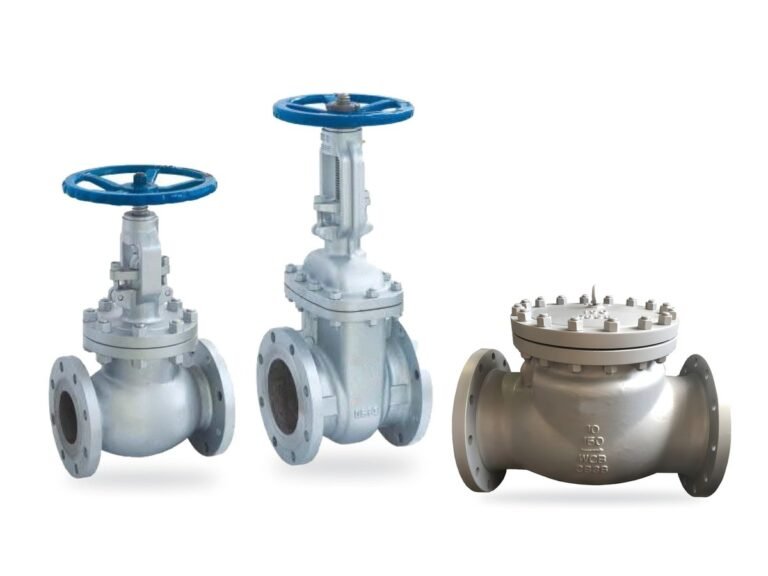
Product range
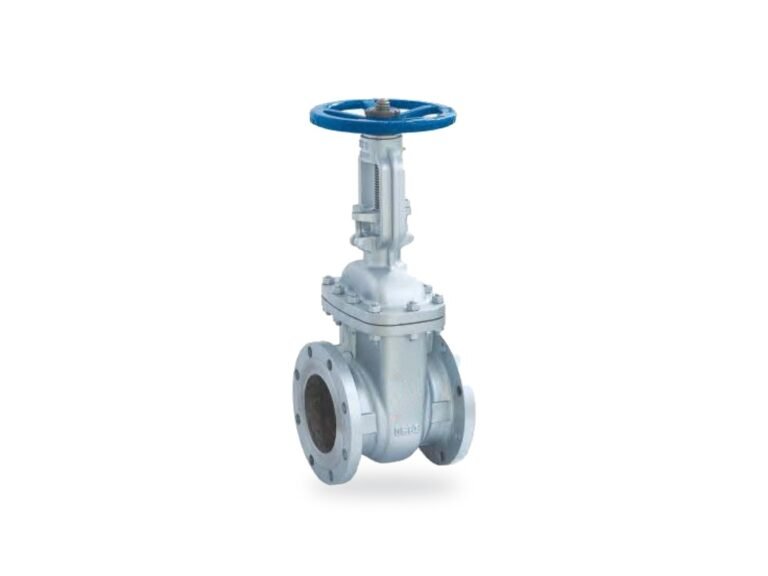
API 600 Cast Steel Gate Valve
2″–42″, Class 150–900; OS&Y, flexible wedge, API trim options.
View details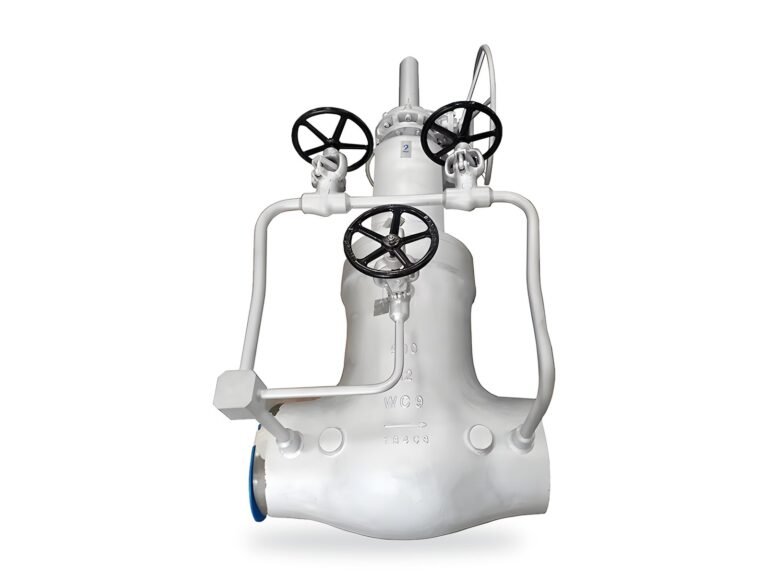
Pressure Seal Gate Valve
Class 900–2500; steam, boiler feedwater and power plant lines; WC6/WC9/C12A.
View detailsAPI 6D Slab Gate Valve
Full bore suitable for pigging; pipeline and station service.
View details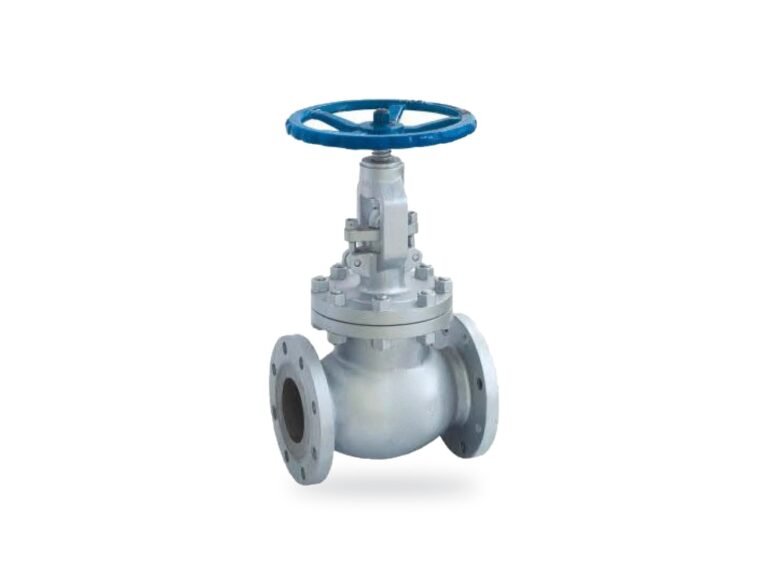
BS 1873 Cast Steel Globe Valve
Bolted and pressure seal bonnet; flat or plug disc, backseat, Stellite trim.
View details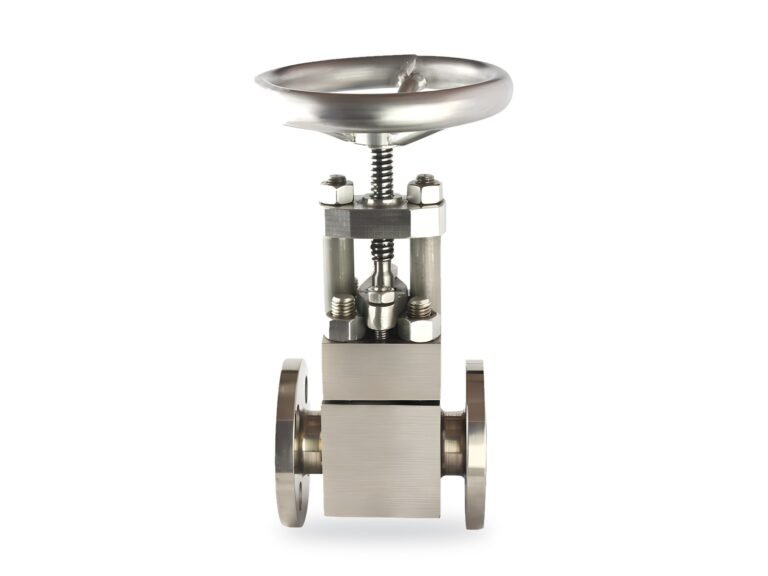
Bellows Seal Globe Valve
Welded metal bellows for zero stem leakage; thermal oil and chemicals.
View details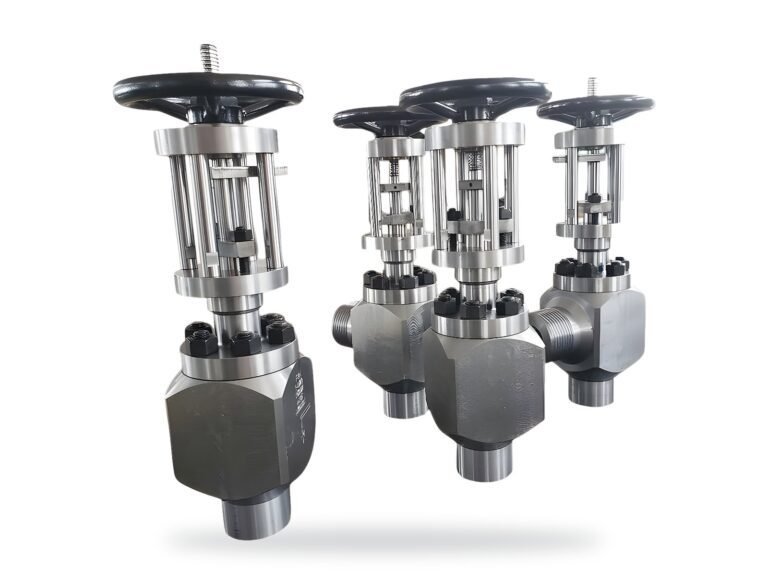
Angle Globe Valve
Inlet and outlet at 90°; acts as an elbow, high differential pressure relief.
View detailsGate valve designs
API 600 bolted bonnet gate valve (ISO 10434)
The standard isolation valve in refineries and petrochemical plants, with bolted bonnet, outside screw and yoke rising stem (OS&Y), flexible or solid wedge and renewable seat rings. Bolted bonnets cover Class 150–900; from Class 900 upward, pressure seal bonnets are generally used (these fall outside API 600 and are built to ASME B16.34). See API 600 gate valves.
Pressure seal gate valve
The bonnet seal is compressed harder as internal pressure rises, so at high pressure and temperature the joint is more reliable and more compact than a bolted flange. It is preferred in Class 900–2500 for high-temperature steam, boiler feedwater and power plant lines. See pressure seal gate valves.
API 6D slab gate valve
A through-conduit pipeline valve with a one-piece bored slab gate; in the open position the bore lines up with the pipe and gives a smooth passage suitable for pigging. See API 6D slab gate valves.
Corrosion-resistant stainless gate valves are listed under API 603 gate valves, small-bore forged designs under API 602 forged steel valves and PN-rated designs under DIN / EN valves.
Globe valve designs
BS 1873 cast steel globe valve
Bolted bonnet, rising stem and backseat design with flat or plug disc options; plug or parabolic discs are preferred where flow regulation is required. Pressure seal designs are used at high pressure and temperature. See BS 1873 globe valves.
Bellows seal globe valve
The stem is fully isolated from the fluid by a welded metal bellows, which eliminates leakage through the packing. It suits heat transfer oil, toxic or costly chemicals, vacuum and zero-emission service. See bellows seal globe valves.
Angle globe valve
Inlet and outlet are at 90° to each other, so the valve also acts as an elbow and reduces pressure drop. It is used in drain lines and in lines with a high pressure differential. See angle globe valves.
Standards
- API 600 / ISO 10434: bolted bonnet steel gate valves with flanged and butt-weld ends.
- API 6D: pipeline valves, including slab and through-conduit gate valves.
- BS 1873: steel globe valves for the petroleum and petrochemical industries, with a design basis comparable to API 623.
- API 624: fugitive emission type test for rising stem valves with graphite packing.
- ASME B16.34, B16.10, B16.5 / B16.47: pressure-temperature ratings, face-to-face dimensions and flanges.
- API 598 / EN 12266-1: pressure testing.
Our article API 600, 602 and 623 valve standards decoded compares the scope of these standards.
How to choose a gate or globe valve
- Duty: isolation only, or flow regulation as well? Gate valves are for fully open or fully closed service; choose a globe valve for throttling.
- Wedge type: a flexible wedge reduces the risk of binding under thermal expansion and piping loads.
- Trim number and hardfacing, based on temperature, erosion and corrosion; see how to read valve codes and trim numbers.
- Bonnet type: bolted (Class 150–900) or pressure seal (high pressure and temperature); bellows seal where packing leakage is not acceptable.
- Fugitive emission requirement (API 624 / ISO 15848-1) and packing type.
- Globe valve flow direction: in standard installations the flow enters under the disc; follow the arrow on the body.
- Operation: handwheel, bevel gear operator or multi-turn electric actuator.
At a glance
| Size range | Gate: generally 2″ and larger, up to 42″ (DN1050); globe: up to 24″ (DN600); larger sizes on a project basis |
|---|---|
| Pressure class | ASME Class 150–2500 |
| End connections | RF / RTJ flanged, butt weld (BW) |
| Bonnet | Bolted, pressure seal; bellows seal for globe valves |
| Closure member | Flexible or solid wedge; one-piece slab (API 6D); flat, plug or parabolic globe disc |
| Stem | Outside screw and yoke (OS&Y), rising stem, backseat design |
| Body materials | WCB, WCC; LCB, LCC; WC6, WC9, C5 (high temperature); CF8M, CF3M; duplex and special alloys |
| Operation | Handwheel, bevel gear operator, multi-turn electric actuator, pneumatic cylinder |
Documentation and testing
On industrial projects the documentation package matters as much as the valve. We confirm the certificate and test scope for every line item at quotation stage:
- EN 10204 3.1 material certificates for pressure-retaining and wetted parts, traceable by heat number
- EN 10204 3.2 with third-party inspection, on request
- Pressure test reports to API 598 or EN 12266-1: shell, seat and, where specified, gas tests
- Fire-test certificates (API 607 / ISO 10497) for fire-safe type-tested designs
- PMI reports for alloy and stainless materials
- Dimensional, visual and coating inspection records
- PED 2014/68/EU CE declaration for equipment within its scope
- NACE MR0175 / ISO 15156 compliance statement for sour (H₂S) service
Technical datasheets
- PDFAPI 600 Cast Steel Gate ValvePDF · English · 3 pages
- PDFPressure Seal Gate ValvePDF · English · 2 pages
- PDFAPI 6D Slab Gate ValvePDF · English · 1 page
- PDFBS 1873 Cast Steel Globe ValvePDF · English · 2 pages
- PDFBellows Seal Globe ValvePDF · English · 1 page
- PDFAngle Globe ValvePDF · English · 1 page
Key data and document numbers for all 34 series are on the industrial valve datasheets page.
Frequently Asked Questions
What is the difference between a gate valve and a globe valve?
A gate valve is designed for fully open or fully closed isolation and has very low pressure drop when open. A globe valve moves its disc perpendicular to the seat, so it provides both tight shutoff and flow regulation; because the flow changes direction inside the body, its pressure drop is higher. Do not throttle with a gate valve: in a partly open position, the wedge and seats erode in high-velocity flow and the wedge vibrates.
What is the difference between API 600 and API 602?
API 600 covers cast steel bolted bonnet gate valves with flanged or butt-weld ends, generally in 2″ and larger. API 602 covers compact steel valves of DN100 and smaller, mostly forged-body valves in ½”–2″, and includes pressure classes of its own such as Class 800. See API 602 forged steel valves.
What does a flexible wedge do?
A flexible wedge tolerates small deformations of the body caused by thermal expansion and piping loads. This reduces the risk of thermal binding, where a valve closed hot jams between its seats as it cools.
When is a bellows seal globe valve required?
When even minimal packing leakage is unacceptable: heat transfer oil, toxic, flammable or costly chemicals, vacuum lines and plants with strict emission targets. The bellows isolates the stem completely, and the packing remains as a secondary seal.
Related categories

API 602 Forged Steel Valves
Compact forged gate, globe and check valves to API 602 / ISO 15761; Class 800 and 1500; SW, NPT, BW ends.
View details
Industrial Check Valves
Swing (BS 1868 / API 6D), API 594 dual plate wafer and axial flow nozzle check valves; Class 150–2500.
View details
DIN / EN Valves
DIN 3352 / EN 1984 gate, DIN 3356 / EN 13709 globe, EN 16767 check and EN 1983 ball valves; PN16–PN100.
View details
Special Alloy Valves
Duplex, super duplex, nickel alloy, titanium, zirconium and nickel-aluminum bronze valves for corrosive service.
View detailsRequest a quote: Cast Steel Gate & Globe Valves
Share your valve list, datasheet or project specification. We review standards, materials and documentation line by line and return an itemized offer, with any deviation from the specification stated in writing.