
Industrial Valves

Product range
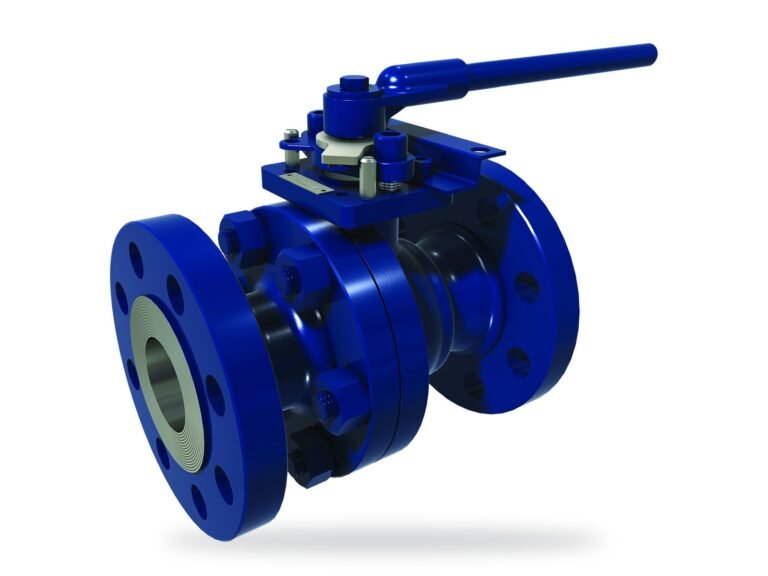
Floating Ball Valve
½”–10″, Class 150–600; two-piece and three-piece, fire-safe, antistatic.
View details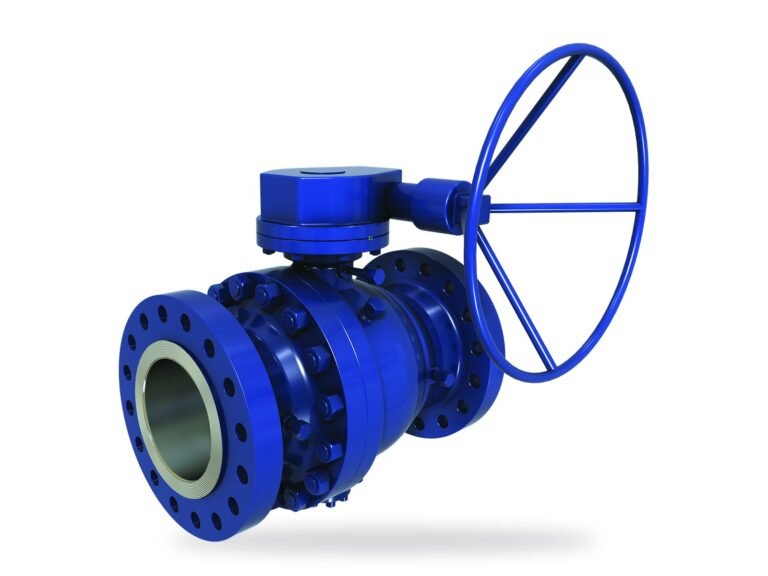
Trunnion Mounted Ball Valve
2″–60″, Class 150–2500; spring-loaded seats, DBB/DIB, sealant injection.
View details
Forged Steel Trunnion Ball Valve
Class 150–2500, mainly high pressure; A105N, LF2, F316, F51; API 607.
View details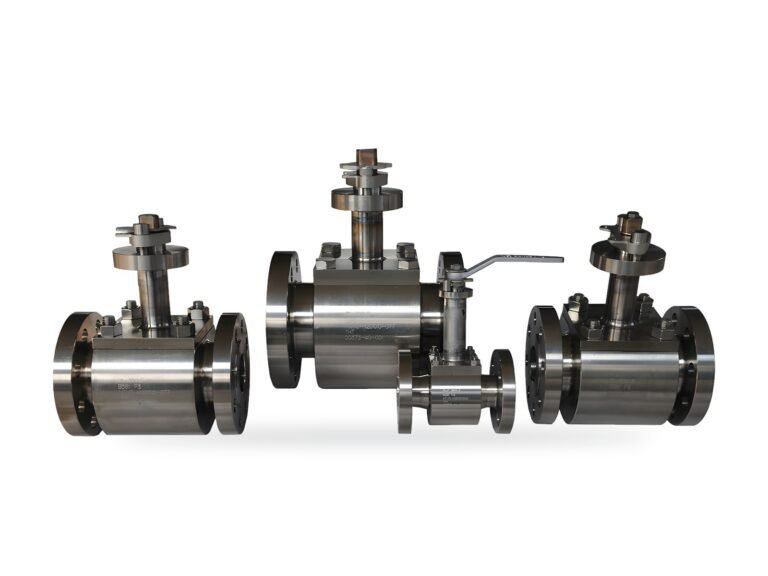
Metal Seated Ball Valve
Tungsten or chromium carbide coated ball and seats; abrasive and high-temperature service.
View detailsBall valve designs
Floating ball valve
The ball is not fixed: in the closed position, line pressure pushes it against the downstream seat, and this force creates the seal. The design is simple and economical and is typically built in ½”–10″ (DN15–DN250) with a 2-piece or 3-piece body, full or reduced bore. As size and pressure increase, the load on the ball, and with it the operating torque, rises quickly. See floating ball valves.
Trunnion mounted ball valve
The ball is supported by upper and lower stems, and sealing comes from movable seats pressed against the ball by springs and line pressure. Torque stays low, so this design is preferred in large sizes such as 2″–60″ (DN50–DN1500) and in high pressure classes such as Class 600–2500. Pipeline functions such as double block and bleed (DBB/DIB), body cavity relief and emergency sealant injection are available in this design. See trunnion mounted ball valves.
Forged steel trunnion ball valve
For high-pressure lines (Class 900–2500) and compact installations, the body is made from forgings (A105N, LF2, F316, F51) instead of castings. Forged bodies are free of casting defects such as gas porosity and shrinkage. See forged trunnion ball valves.
Fire-safe ball valve
If the soft seats burn away in a fire, the ball seats against a metal seat so that leakage stays within defined limits. The design must be type-tested to API 607 or ISO 10497, and it is usually mandatory in hydrocarbon and flammable gas service. Our API 607 fire-safe guide explains the type test.
Metal-seated ball valve
For abrasive particles, high temperatures and other conditions a soft seat cannot withstand, the ball and seats are hardfaced with tungsten carbide, chromium carbide or CoCr overlays. See metal-seated ball valves.
Standards
- API 6D: pipeline and facility valves; DBB/DIB definitions, seat tests and documentation requirements.
- ISO 17292: metal ball valves for process lines in the petroleum, petrochemical and allied industries.
- ASME B16.34: body design by pressure-temperature rating, wall thickness and material group.
- API 607 / ISO 10497: fire type testing; API 607 covers quarter-turn and non-metallic seated valves, ISO 10497 covers all valve types.
- API 598 / EN 12266-1: shell and seat pressure tests.
- ISO 15848-1 / API 641: fugitive emission classification of stem seals.
- ASME B16.10 / ASME B16.5 / EN 1092-1: face-to-face dimensions and flanged connections.
Applications
- Refinery and petrochemical process, fuel and hydrocarbon lines
- Natural gas transmission, distribution and metering stations
- Power plant auxiliary systems and fuel lines
- Corrosive fluids in chemical plants, with stainless steel and special alloy bodies
- LNG and industrial gas plants, with extended-stem cryogenic ball valves
How to choose a ball valve
- Fluid, operating and design pressure and temperature: confirm the pressure class for the body material in the ASME B16.34 tables.
- Floating or trunnion: in general practice, trunnion designs are preferred above approximately 6″–8″ in Class 150–300 and from smaller sizes in Class 600 and above; the exact limit comes from the manufacturer’s torque calculation.
- Full or reduced bore: full bore where pigging or minimum pressure drop is required.
- Seat material: PTFE, RPTFE, PEEK, nylon or metal; check the temperature and pressure limits.
- Whether fire testing (API 607), anti-static design and a fugitive emission class (ISO 15848-1) are required.
- For H₂S service: NACE MR0175 / ISO 15156 and the required certificate level (EN 10204 3.1 or 3.2).
- Operation: lever, gear operator or actuator; ISO 5211 mounting pad and, where required, ATEX compliance.
At a glance
| Size range | ½”–60″ (DN15–DN1500); floating design typically ½”–10″ |
|---|---|
| Pressure class | ASME Class 150, 300, 600, 900, 1500, 2500; PN16–PN100 (EN 1092-1 flanged) |
| End connections | RF and RTJ flanged, butt weld (BW), socket weld (SW), threaded (NPT/BSP) |
| Body construction | 2-piece, 3-piece; full bore or reduced bore |
| Seats | PTFE, RPTFE, PEEK, nylon; metal-seated (hardfaced) |
| Body materials | WCB, A105N (carbon steel); LCB, LCC, LF2 (low temperature); CF8M, F316 (stainless); F51, F53, F55 (duplex and super duplex); special alloys |
| Design features | Fire-safe (API 607), anti-static, anti-blowout stem, extended stem, DBB/DIB (trunnion), cavity relief |
| Operation | Lever, gearbox, bare stem (ISO 5211 mounting pad), pneumatic or electric actuator |
Documentation and testing
On industrial projects the documentation package matters as much as the valve. We confirm the certificate and test scope for every line item at quotation stage:
- EN 10204 3.1 material certificates for pressure-retaining and wetted parts, traceable by heat number
- EN 10204 3.2 with third-party inspection, on request
- Pressure test reports to API 598 or EN 12266-1: shell, seat and, where specified, gas tests
- Fire-test certificates (API 607 / ISO 10497) for fire-safe type-tested designs
- PMI reports for alloy and stainless materials
- Dimensional, visual and coating inspection records
- PED 2014/68/EU CE declaration for equipment within its scope
- NACE MR0175 / ISO 15156 compliance statement for sour (H₂S) service
Technical datasheets
- PDFFloating Ball ValvePDF · English · 2 pages
- PDFTrunnion Mounted Ball ValvePDF · English · 2 pages
- PDFForged Steel Trunnion Ball ValvePDF · English · 2 pages
- PDFMetal Seated Ball ValvePDF · English · 1 page
Key data and document numbers for all 34 series are on the industrial valve datasheets page.
Frequently Asked Questions
What is the difference between a floating and a trunnion mounted ball valve?
In a floating ball valve the ball is free, and line pressure pushes it against the downstream seat to seal; the design is simple and economical, but torque rises steeply with size and pressure. In a trunnion mounted ball valve the ball is fixed by stems and the seats move against it; torque stays low, which suits large sizes, high pressure and pipeline functions such as DBB.
What is the difference between API 6D and ISO 17292?
API 6D is the broader specification for pipeline and facility valves, with DBB/DIB definitions, additional seat tests and documentation requirements. ISO 17292 covers metal ball valves for in-plant process lines in the petroleum, petrochemical and allied industries. We prepare the offer and test plan to whichever standard your specification calls for.
What does fire-safe mean for a ball valve?
A fire-safe ball valve is a design that has passed a fire type test to API 607 or ISO 10497. Even if the soft seats are destroyed in a fire, the ball seats against a metal seat, and external and internal leakage stay within the limits defined in the standard. The type test qualifies a design family; the certificate shows that the ordered valve falls within the tested design.
Can a ball valve be used for throttling?
Standard ball valves are designed for fully open or fully closed service. In a partly open position, high-velocity flow erodes the soft seats. For flow regulation, a globe valve or a V-port control ball valve is the better choice.
Related categories
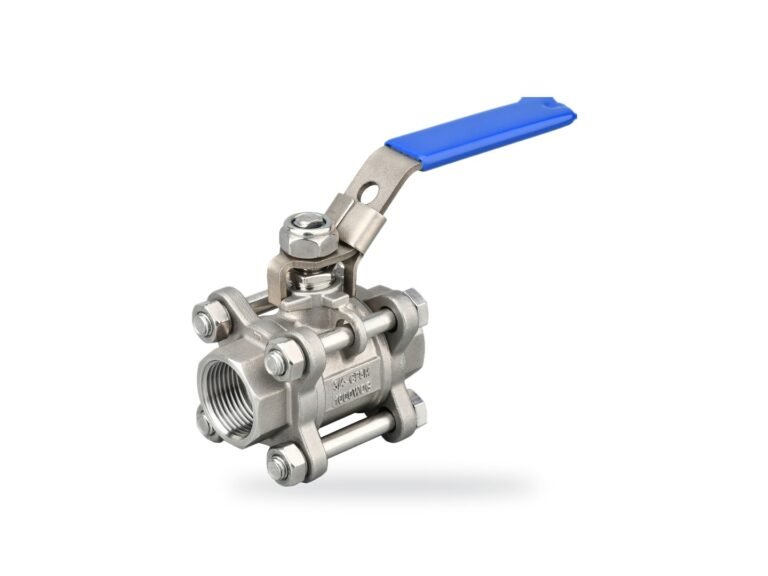
Stainless Steel Valves
CF8 (304) and CF8M (316) threaded and flanged ball valves, API 603 gate valves and duplex F51 / F55 options.
View details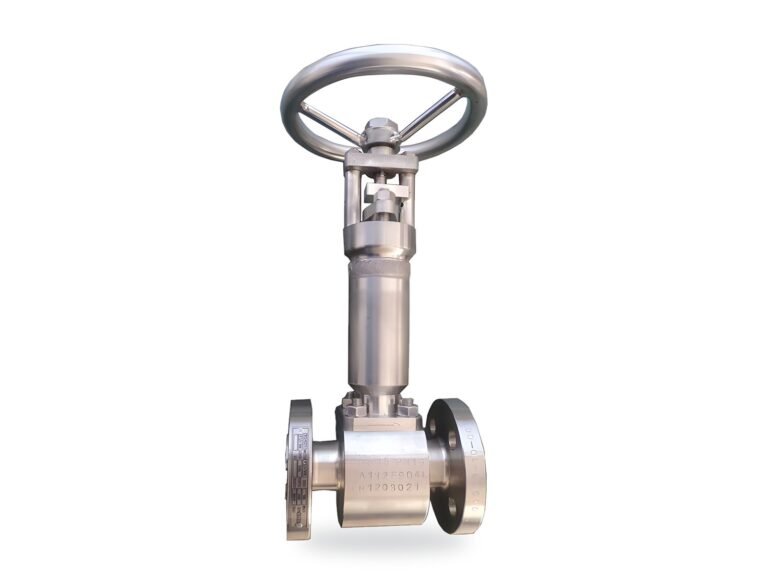
Cryogenic Valves
BS 6364 / ISO 28921-1 cryogenic valves down to −196 °C: extended bonnet ball, gate, globe, check and butterfly valves.
View details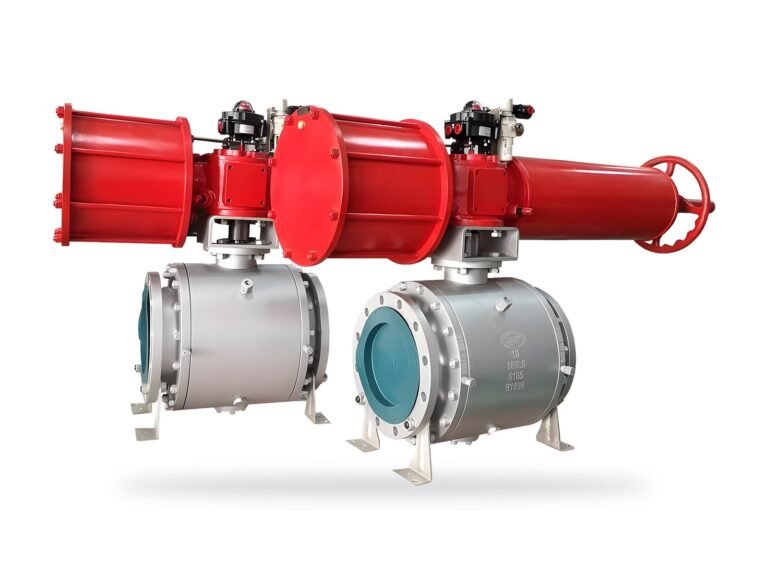
Actuated Valves
Pneumatic and electric actuated valve packages; ISO 5211, NAMUR and ATEX options; assembled and function tested.
View details
DIN / EN Valves
DIN 3352 / EN 1984 gate, DIN 3356 / EN 13709 globe, EN 16767 check and EN 1983 ball valves; PN16–PN100.
View detailsRequest a quote: Ball Valves
Share your valve list, datasheet or project specification. We review standards, materials and documentation line by line and return an itemized offer, with any deviation from the specification stated in writing.