
Ball Valves
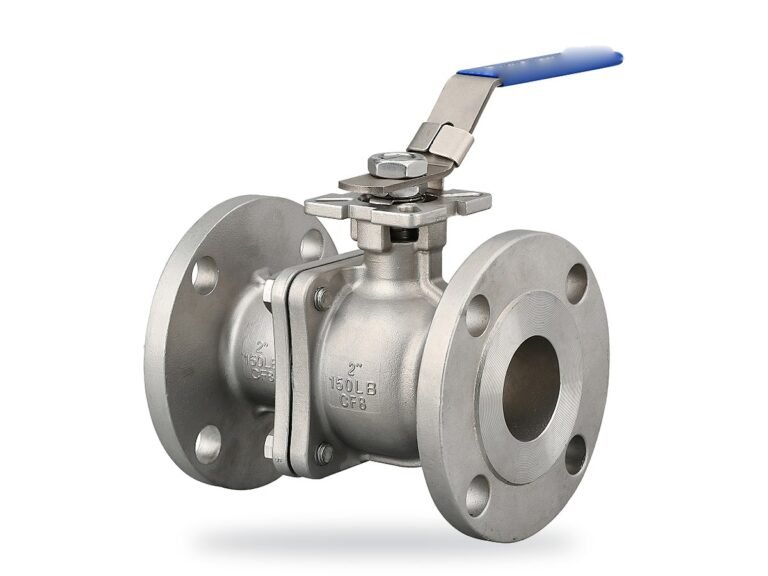
In a floating ball valve the ball is not fixed: in the closed position, line pressure pushes the ball against the downstream seat to create the seal. Its simple design, small number of parts and economical construction make it the usual isolation valve on small and mid-size process lines.
Overview
In the floating design the sealing force comes directly from line pressure, so the valve seals well even at low pressure. However, as size and pressure class increase, the load on the ball and the operating torque rise quickly; the floating type is therefore generally used at 10″ (DN250) and below, in moderate pressure classes. For larger sizes and higher pressures, a trunnion mounted ball valve is preferred.
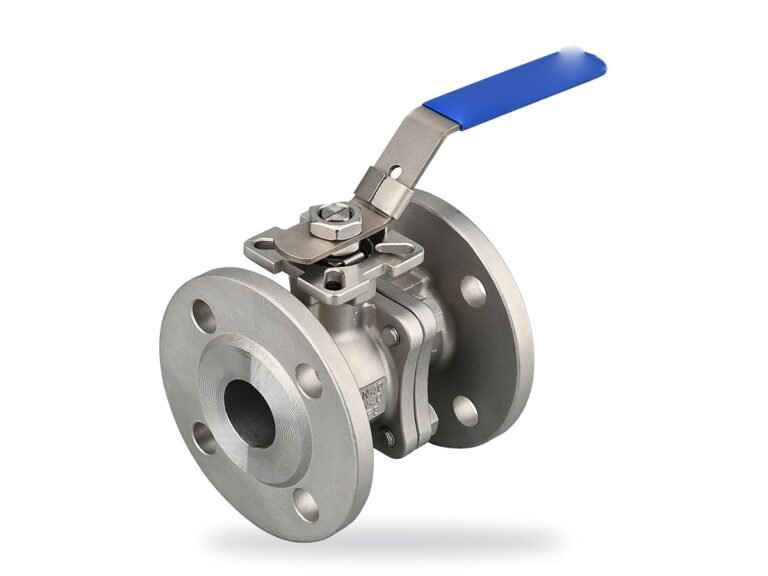
The body can be two-piece or three-piece, with full bore or reduced bore. For hydrocarbon service, a fire-safe design type-tested to API 607, an antistatic device providing electrical continuity between ball and stem, and an anti-blowout stem are standard.
Technical specifications
| Size | ½”–10″ (DN15–DN250) |
|---|---|
| Pressure class | ASME Class 150, 300, 600; higher classes in small sizes with forged bodies |
| End connections | RF / RTJ flanged (ASME B16.5), butt-weld, socket-weld, threaded |
| Body | Two-piece or three-piece; full bore or reduced bore |
| Seats | PTFE, RPTFE, PEEK, nylon |
| Materials | WCB, LCC, CF8M, CF3M; A105N, LF2, F316 (forged) |
| Operation | Lockable lever, gear operator, pneumatic or electric actuator on ISO 5211 mounting pad |
| Testing | API 598 / EN 12266-1; API 607 fire-test certificate for fire-safe designs |
Key features
- Fire-safe design (API 607 / ISO 10497)
- Antistatic ball-to-stem-to-body continuity
- Anti-blowout stem
- Lockable lever and ISO 5211 actuator mounting pad
- Extended stem and NACE MR0175 compliant materials on request
Typical part materials
| Part | Carbon steel | Low temperature | Stainless steel |
|---|---|---|---|
| Body, end cap | A216 WCB | A352 LCB / LCC | A351 CF8, CF8M, CF3, CF3M |
| Ball | SS304; SS316 or ENP-plated A105 on request | SS304 | SS304, SS316, SS304L, SS316L |
| Stem | A182 F6a | A182 F304 | A182 F304, F316, F304L, F316L |
| Seat | PTFE, RPTFE, PEEK, nylon-based | PTFE, RPTFE, PEEK | PTFE, RPTFE, PEEK, nylon-based |
| Stud bolts / nuts | A193 B7 / A194 2H | A320 L7 / A194 7 | A193 B8, B8M / A194 8, 8M |
Gaskets are SS304/SS316 with graphite or PTFE, O-rings are FKM and packing is flexible graphite / PTFE. A lockable lever is standard; actuators can be mounted on the ISO 5211 mounting pad.
Documentation and testing
On industrial projects the documentation package matters as much as the valve. We confirm the certificate and test scope for every line item at quotation stage:
- EN 10204 3.1 material certificates for pressure-retaining and wetted parts, traceable by heat number
- EN 10204 3.2 with third-party inspection, on request
- Pressure test reports to API 598 or EN 12266-1: shell, seat and, where specified, gas tests
- Fire-test certificates (API 607 / ISO 10497) for fire-safe type-tested designs
- PMI reports for alloy and stainless materials
- Dimensional, visual and coating inspection records
- PED 2014/68/EU CE declaration for equipment within its scope
- NACE MR0175 / ISO 15156 compliance statement for sour (H₂S) service
Technical datasheet
Frequently Asked Questions
Up to what size are floating ball valves used?
In general practice the floating type is economical and reliable at 10″ (DN250) and below, in Class 150–300. At Class 600 and above, or in larger sizes, torque and seat loads increase, so a trunnion mounted design is recommended; the exact limit is set by the manufacturer’s torque calculation.
Does a floating ball valve seal in both directions?
Standard floating ball valves are bidirectional: whichever side the pressure comes from, the ball is pushed against the opposite seat. In services that require cavity relief, such as cryogenic service, a unidirectional design is used and the direction is marked with an arrow on the valve.
Related products
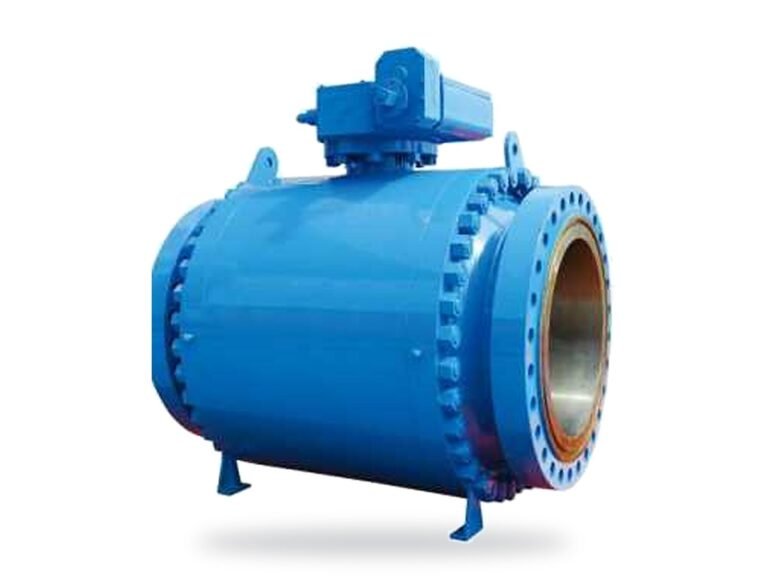
Trunnion Mounted Ball Valve
2″–60″, Class 150–2500; spring-loaded seats, DBB/DIB, sealant injection.
View details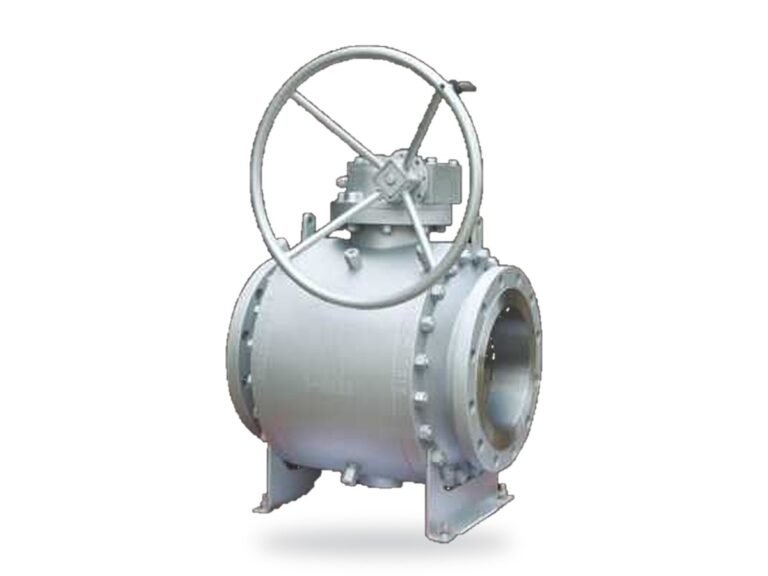
Forged Steel Trunnion Ball Valve
Class 150–2500, mainly high pressure; A105N, LF2, F316, F51; API 607.
View details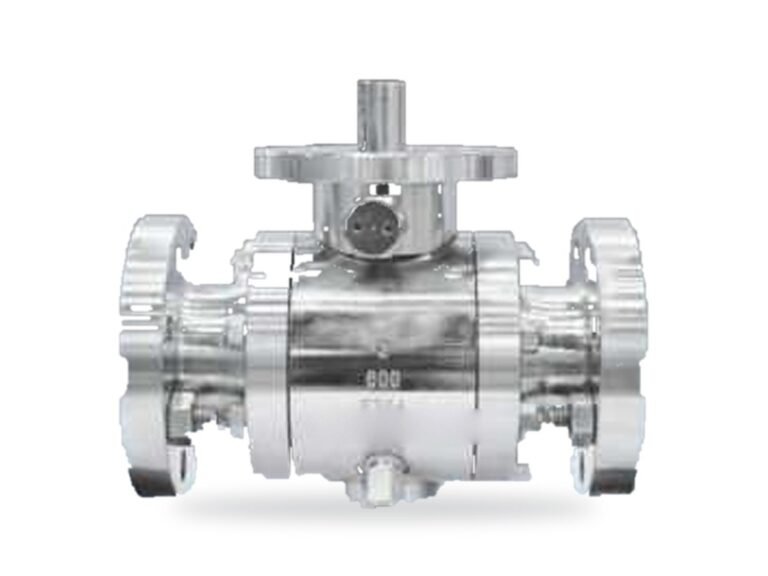
Metal Seated Ball Valve
Tungsten or chromium carbide coated ball and seats; abrasive and high-temperature service.
View detailsRequest a quote: Floating Ball Valve
Share your valve list, datasheet or project specification. We review standards, materials and documentation line by line and return an itemized offer, with any deviation from the specification stated in writing.