
Industrial Check Valves
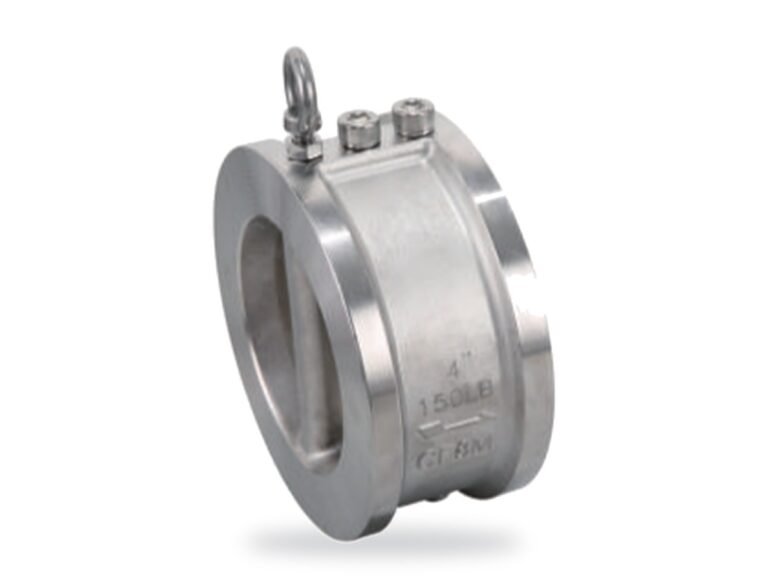
In a dual plate check valve, two half discs close around a central hinge pin with spring assistance. Its short face-to-face and low weight allow it to replace a swing check valve, and because it closes quickly when flow stops, it reduces water hammer on pump lines.
Overview
The springs start closing the plates before flow velocity reaches zero, so the plates seat before reverse flow velocity develops and the surge is reduced. Wafer types are clamped between flanges by the flange bolts; lug and double-flanged types suit end-of-line service and easier removal. Design and testing follow API 594 and API 598. For how it compares with swing and axial flow designs, see check valve types explained.
Technical specifications
| Type | Wafer, lug, double-flanged; retainerless or pinned design |
|---|---|
| Pressure class | ASME Class 150–2500 |
| End connections | Between ASME B16.5 / B16.47 flanges |
| Seat | Metal (hard-faced) or elastomer (NBR, EPDM, FKM) |
| Materials | WCB, LCC, CF8M, duplex; plates 316 / duplex; Inconel springs |
| Testing | API 598 |
Key features
- Short face-to-face and low weight
- Spring-assisted fast closing against water hammer
- Horizontal and vertical upward flow installation
- Metal or elastomer seat option
Wafer face-to-face dimensions (API 594, mm)
Wafer-type dual plate check valves are clamped between two flanges with stud bolts; face-to-face dimensions follow API 594 and are approximately 1/3 to 1/6 of those of a swing check valve of the same size and class.
| NPS | DN | Class 150 | Class 300 | Class 600 |
|---|---|---|---|---|
| 2 | 50 | 60 | 60 | 60 |
| 2½ | 65 | 67 | 67 | 67 |
| 3 | 80 | 73 | 73 | 73 |
| 4 | 100 | 73 | 73 | 79 |
| 6 | 150 | 98 | 98 | 136 |
| 8 | 200 | 127 | 127 | 165 |
| 10 | 250 | 146 | 146 | 213 |
| 12 | 300 | 181 | 181 | 229 |
| 14 | 350 | 184 | 222 | 273 |
| 16 | 400 | 191 | 232 | 305 |
| 18 | 450 | 203 | 264 | 362 |
| 20 | 500 | 219 | 292 | 368 |
| 24 | 600 | 222 | 318 | 438 |
Lug and double-flanged types within API 594 Type A have the same face-to-face dimension; double-flanged types are also available in a long pattern. Exact dimensions are shown on the GA drawing supplied with the quotation.
Part materials
| Part | Carbon steel | Stainless steel |
|---|---|---|
| Body | A216 WCB (hardfaced seat) | A351 CF8M (hardfaced seat) |
| Plates (discs) | A216 WCB + CoCr hardfacing | A351 CF8M + CoCr hardfacing |
| Hinge pin | A276 410 | A276 316 |
| Spring | Alloy X-750 | Alloy X-750 / SS316 |
| Spring retainer | A182 F6a | A182 F316 |
On request: duplex (A995 4A / F51), aluminum bronze and nickel alloy bodies; soft-seated (EPDM, NBR, FKM) versions for water service.
Documentation and testing
On industrial projects the documentation package matters as much as the valve. We confirm the certificate and test scope for every line item at quotation stage:
- EN 10204 3.1 material certificates for pressure-retaining and wetted parts, traceable by heat number
- EN 10204 3.2 with third-party inspection, on request
- Pressure test reports to API 598 or EN 12266-1: shell, seat and, where specified, gas tests
- Fire-test certificates (API 607 / ISO 10497) for fire-safe type-tested designs
- PMI reports for alloy and stainless materials
- Dimensional, visual and coating inspection records
- PED 2014/68/EU CE declaration for equipment within its scope
- NACE MR0175 / ISO 15156 compliance statement for sour (H₂S) service
Technical datasheet
Frequently Asked Questions
How does a dual plate check valve reduce water hammer?
Spring assistance forces the plates to close while the flow is decelerating, so the valve closes before reverse flow velocity develops. This reduces the pressure surge (water hammer) caused by the sudden stop of reverse flow.
Wafer or lug type?
The wafer type is economical and light and is clamped between two flanges. The lug type has threaded lugs and is preferred for end-of-line service or where maintenance is needed without removing the flange on one side.
Related products
Swing Check Valve
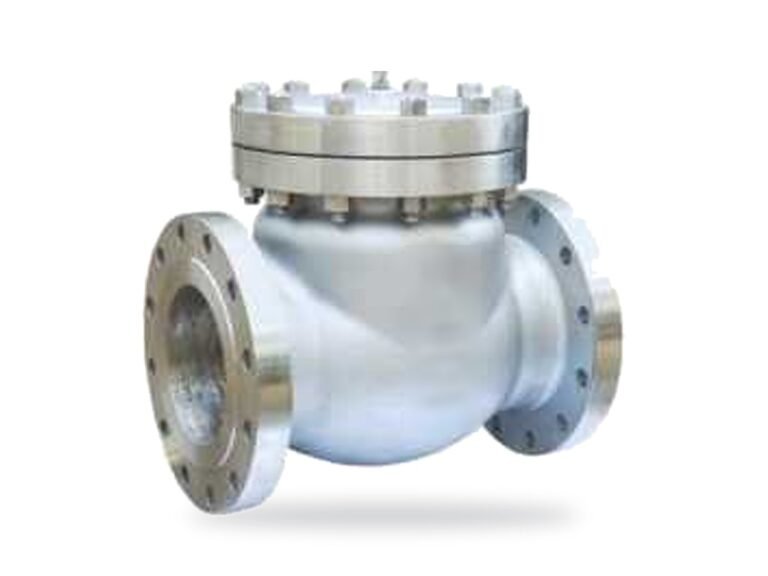
Bolted bonnet, renewable seat; low pressure drop, piggable option.
View details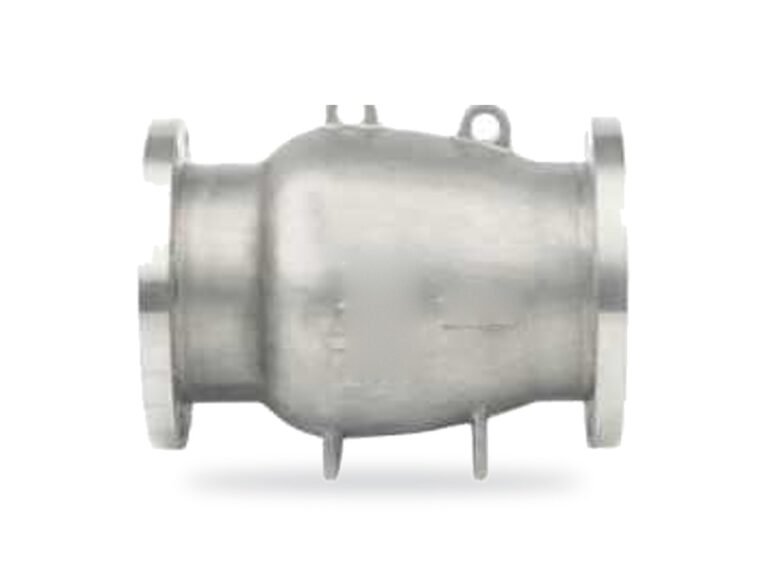
Axial Flow Nozzle Check Valve
2″–60″, Class 150–1500; spring-loaded disc, non-slam closing, low pressure drop.
View detailsRequest a quote: Dual Plate Wafer Check Valve
Share your valve list, datasheet or project specification. We review standards, materials and documentation line by line and return an itemized offer, with any deviation from the specification stated in writing.