
Industrial Valves

Design options
Bonneted and bonnetless bodies
In a bonnetless design the gate passes directly out through the packing; it is light and economical. In a bonneted design the gate travels inside a closed chamber, which is preferred for hazardous or odorous media and wherever the medium must not escape to atmosphere.
Seat types
Soft-seated types (EPDM, NBR, FKM and similar) give tight shutoff. Metal-seated types last longer in abrasive slurry and at high temperature. For abrasive service, hardened gates and deflector cones that direct the flow away from the seat are available.
Unidirectional and bidirectional sealing
Standard knife gate valves give full shutoff in one direction; choose a bidirectional design where back pressure can occur.
Our knife gate valve selection guide covers design and application details.
How to choose a knife gate valve
- Medium: fibers, solids, slurry or dry bulk material; select seat and gate materials for abrasion and corrosion.
- Pressure: MSS SP-81 types are rated 150 psi (≈10 bar) cold working pressure; allowable differential pressure falls as size increases, and higher-pressure designs are available on request.
- Sealing direction: unidirectional, or bidirectional where back pressure can occur.
- Body: wafer, lug or flanged; ASME B16.5 Class 150 or EN 1092-1 PN10 / PN16 drilling, stated in the offer.
- Construction: bonneted or bonnetless, rising or non-rising stem.
- Operation: handwheel, bevel gear, pneumatic cylinder or electric actuator.
Standards
- MSS SP-81: stainless steel, bonnetless, flanged knife gate valves.
- ASME B16.5 / EN 1092-1: flange drilling; for lug and wafer types the drilling standard is stated in the offer.
- MSS SP-81 / EN 12266-1: pressure testing.
Applications
- Mining and mineral processing: slurry, tailings and flotation lines
- Pulp and paper: stock lines
- Wastewater treatment: sludge lines and lines downstream of screens
- Cement, power plant ash lines and pneumatic conveying of powders and granules
- Fibrous and sticky media in food and biogas plants
At a glance
| Size range | 2″–24″ (DN50–DN600); larger sizes on a project basis |
|---|---|
| Pressure rating | Generally up to Class 150; allowable differential pressure decreases as size increases |
| Body type | Wafer, lug (fully drilled), flanged |
| Seat | Soft (EPDM, NBR, FKM) or metal; unidirectional or bidirectional |
| Body / gate materials | CF8, CF8M (stainless), WCB, ductile iron; special alloys (e.g. Alloy C-276) on request |
| Operation | Handwheel (rising or non-rising stem), bevel gear, pneumatic cylinder, electric actuator |
Catalog data
| Size and pressure | 2″–24″ (DN50–DN600), larger sizes on a project basis; 150 psi (≈10 bar) cold working pressure (CWP) for MSS SP-81 types, higher-pressure designs on request |
|---|---|
| Body type | Wafer, lug or flanged |
| Design | MSS SP-81 for bonnetless types, manufacturer’s design standard for bonneted types; ASME B16.5 Class 150 or EN 1092-1 PN10 / PN16 flange drilling |
| Seat | Soft (EPDM, NBR, FKM, PTFE) or metal seat |
| Construction | Bonneted or bonnetless; rising or non-rising stem |
| Operation | Handwheel, gear operator, bare stem, pneumatic or electric actuator |
Documentation and testing
On industrial projects the documentation package matters as much as the valve. We confirm the certificate and test scope for every line item at quotation stage:
- EN 10204 3.1 material certificates for pressure-retaining and wetted parts, traceable by heat number
- EN 10204 3.2 with third-party inspection, on request
- Pressure test reports to API 598 or EN 12266-1: shell, seat and, where specified, gas tests
- Fire-test certificates (API 607 / ISO 10497) for fire-safe type-tested designs
- PMI reports for alloy and stainless materials
- Dimensional, visual and coating inspection records
- PED 2014/68/EU CE declaration for equipment within its scope
- NACE MR0175 / ISO 15156 compliance statement for sour (H₂S) service
Frequently Asked Questions
When should a knife gate valve be used?
When the medium contains fibers, solid particles, slurry or powder. Because the sharp gate cuts through the medium as it closes, the valve works reliably in lines where ball or gate valves would clog or their seats would be damaged.
What is the difference between bonneted and bonnetless knife gate valves?
In a bonnetless valve the gate exits directly through the packing; it is economical and light. In a bonneted valve the gate stays inside a closed chamber, which is preferred where leakage to atmosphere is unacceptable and for odorous or hazardous media.
How should a knife gate valve be installed?
On valves with unidirectional sealing, the arrow on the body shows the pressure side and must be followed. In slurry lines, install the valve in a horizontal pipe with the stem pointing up; mounting it with the stem horizontal or pointing downward increases the risk of solids build-up and leakage.
Related categories
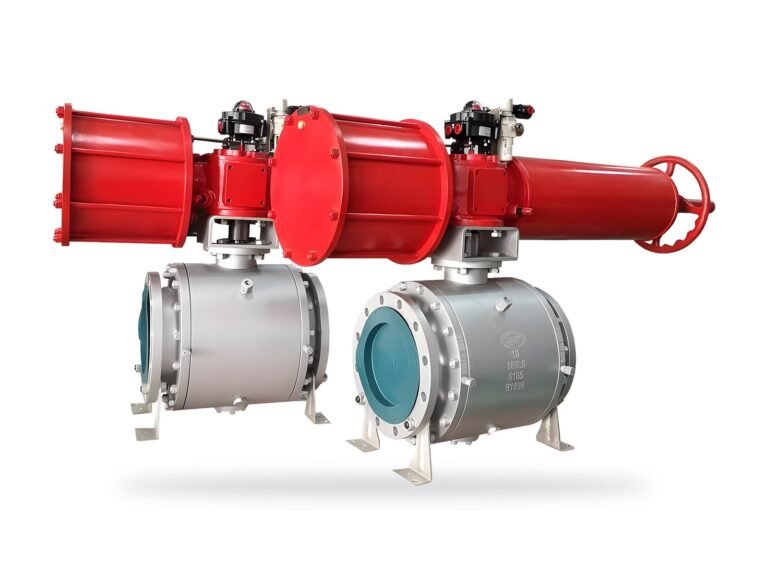
Actuated Valves
Pneumatic and electric actuated valve packages; ISO 5211, NAMUR and ATEX options; assembled and function tested.
View details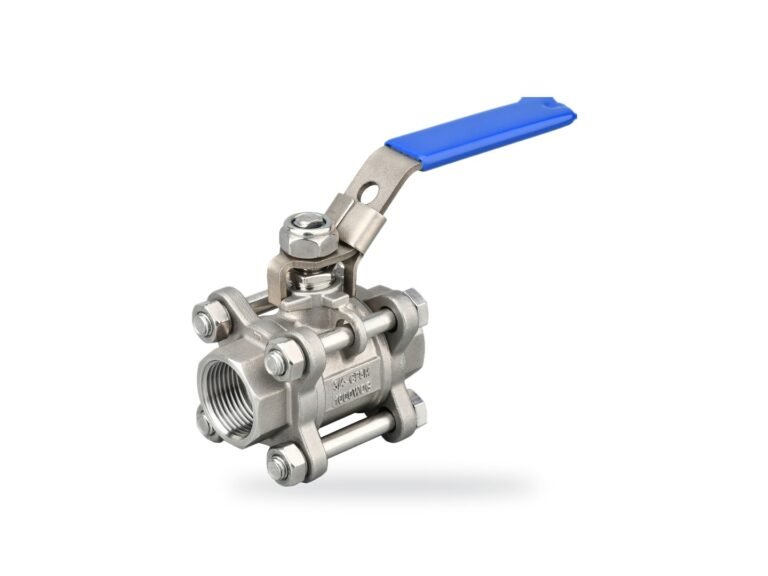
Stainless Steel Valves
CF8 (304) and CF8M (316) threaded and flanged ball valves, API 603 gate valves and duplex F51 / F55 options.
View details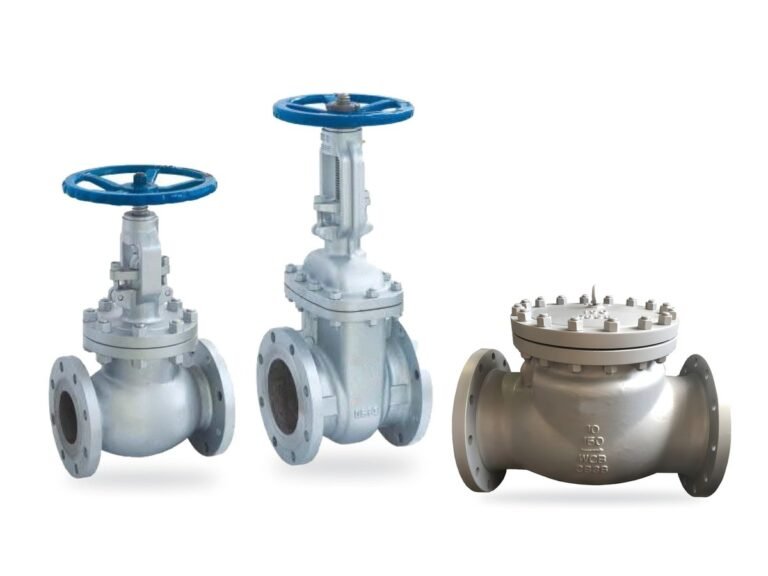
Cast Steel Gate & Globe Valves
API 600, pressure seal and API 6D slab gate valves; BS 1873, bellows seal and angle globe valves.
View details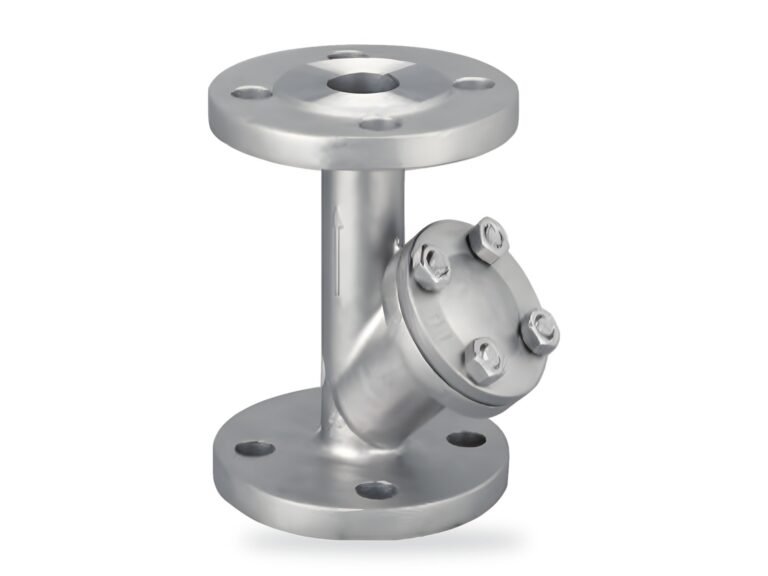
Industrial Strainers
Y-type, basket and duplex basket strainers in carbon and stainless steel; PN16 / PN40, Class 150 / 300.
View detailsRequest a quote: Knife Gate Valves
Share your valve list, datasheet or project specification. We review standards, materials and documentation line by line and return an itemized offer, with any deviation from the specification stated in writing.