
Actuated Valves
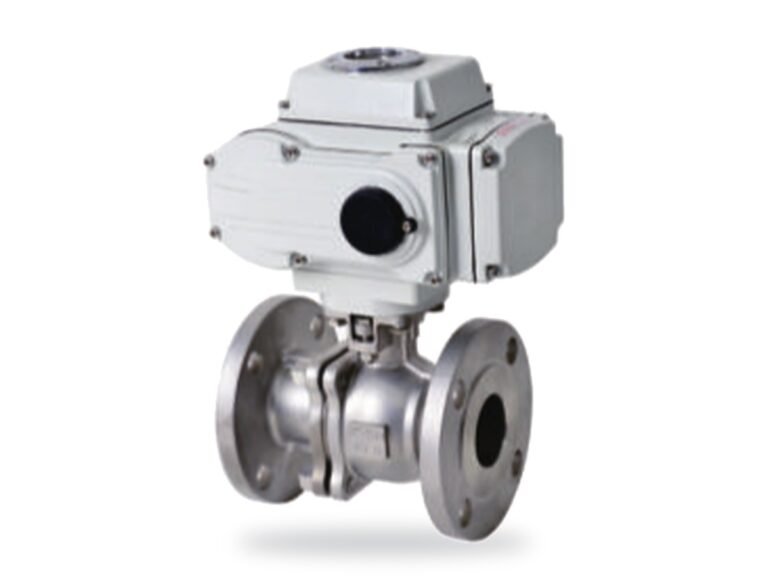
Electric actuated valves are used to open and close valves remotely, or to position them proportionally, where compressed air is not available or at remote sites. Quarter-turn types are used on ball and butterfly valves, multi-turn types on gate and globe valves.
Overview
On on-off types, torque and limit switches protect the valve; on modulating types, position control and feedback use a 4–20 mA or 0–10 V signal. During a power failure the valve can be operated with the manual handwheel; where a fail-safe position is required, backup power (battery or supercapacitor) or a spring return pneumatic solution is considered.
Technical specifications
| Type | Quarter-turn; multi-turn (with gearbox) |
|---|---|
| Control | On-off; modulating 4–20 mA / 0–10 V; Modbus and similar communication options |
| Power supply | 24 V DC, 230 V AC, 380 V AC |
| Protection | IP67 / IP68; ATEX (2014/34/EU) Ex d options |
| Features | Manual handwheel, torque and limit switches, position indicator |
Key features
- No compressed air required
- Proportional position control
- Emergency operation by manual handwheel
- Supplied assembled and function-tested
Documentation and testing
On industrial projects the documentation package matters as much as the valve. We confirm the certificate and test scope for every line item at quotation stage:
- EN 10204 3.1 material certificates for pressure-retaining and wetted parts, traceable by heat number
- EN 10204 3.2 with third-party inspection, on request
- Pressure test reports to API 598 or EN 12266-1: shell, seat and, where specified, gas tests
- Fire-test certificates (API 607 / ISO 10497) for fire-safe type-tested designs
- PMI reports for alloy and stainless materials
- Dimensional, visual and coating inspection records
- PED 2014/68/EU CE declaration for equipment within its scope
- NACE MR0175 / ISO 15156 compliance statement for sour (H₂S) service
Technical datasheet
Frequently Asked Questions
Electric or pneumatic actuator?
Where there is no compressed air on site, where operating frequency is low, or at remote locations, an electric actuator is practical. Where fast closing and a fail-safe position on power loss are required, a spring return pneumatic actuator is usually the better choice; see our electric vs pneumatic actuator comparison.
Related products
Request a quote: Electric Actuated Valve
Share your valve list, datasheet or project specification. We review standards, materials and documentation line by line and return an itemized offer, with any deviation from the specification stated in writing.