
Cast Steel Gate & Globe Valves
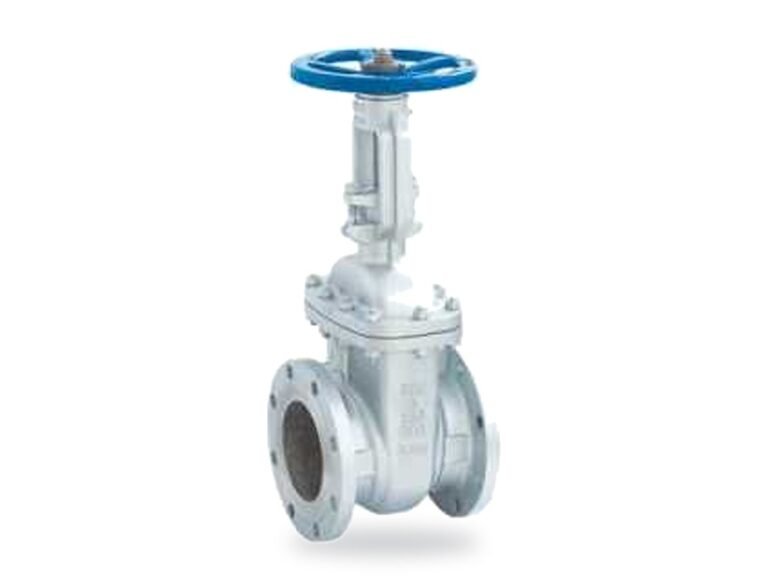
The API 600 cast steel gate valve, with bolted bonnet, outside screw and yoke (OS&Y) rising stem and flexible or solid wedge, is the basic isolation valve of refineries and petrochemical plants. The standard defines minimum wall thicknesses, stem diameters and trim materials for heavy-duty service.
Overview
On API 600 valves in Class 150–900, the bonnet is bolted to the body through a flanged joint; higher classes typically use a pressure seal design, which falls outside API 600 and is built to ASME B16.34. Renewable seat rings, a backseat and the stuffing box components make maintenance easier.
The wedge, seat and stem material combination is specified by the API trim number; the usual refinery choice is Trim 8 (13Cr wedge, Stellite hard-faced seats). Where low emissions are required, a packing arrangement type-tested to API 624 can be specified.
Technical specifications
| Size | 2″–42″ (DN50–DN1050) |
|---|---|
| Pressure class | ASME Class 150, 300, 600, 900 (bolted bonnet) |
| End connections | RF / RTJ flanged (ASME B16.5 / B16.47), butt-weld (ASME B16.25) |
| Wedge | Flexible or solid |
| Trim | API Trim 1, 5, 8, 10, 12 and others |
| Materials | WCB, WCC, LCB, LCC, WC6, WC9, C5, CF8M |
| Operation | Handwheel, bevel gear operator, multi-turn electric actuator |
| Testing | API 598; API 624 low emission on request |
Key features
- OS&Y rising stem: position visible from outside
- Flexible wedge: resists thermal binding
- Renewable seat rings and backseat
- Clear material definition by API trim number
Face-to-face dimensions (mm)
Flange-to-flange dimensions of cast steel gate valves follow ASME B16.10, so valves of the same size and class are interchangeable between manufacturers.
| NPS | DN | Class 150 | Class 300 | Class 600 |
|---|---|---|---|---|
| 2 | 50 | 178 | 216 | 292 |
| 2½ | 65 | 190 | 241 | 330 |
| 3 | 80 | 203 | 283 | 356 |
| 4 | 100 | 229 | 305 | 432 |
| 6 | 150 | 267 | 403 | 559 |
| 8 | 200 | 292 | 419 | 660 |
| 10 | 250 | 330 | 457 | 787 |
| 12 | 300 | 356 | 502 | 838 |
| 14 | 350 | 381 | 762 | 889 |
| 16 | 400 | 406 | 838 | 991 |
| 18 | 450 | 432 | 914 | 1092 |
| 20 | 500 | 457 | 991 | 1194 |
| 24 | 600 | 508 | 1143 | 1397 |
Values are for raised-face (RF) flanged ends and conform to ASME B16.10. Ring-type joint (RTJ) ends are slightly longer; butt-weld (BW) end-to-end dimensions are listed separately in the standard. Exact dimensions are shown on the general arrangement (GA) drawing supplied with the quotation.
Typical part materials
| Part | Carbon steel | Low temperature | Stainless steel | Alloy steel (high temperature) |
|---|---|---|---|---|
| Body, bonnet, wedge | A216 WCB | A352 LCB / LCC | A351 CF8, CF8M, CF3, CF3M | A217 WC6, WC9, C5 |
| Seat ring | A105N (hardfaced) | A350 LF2 | Same stainless grade as body | A182 F11, F22, F5 |
| Stem | A182 F6a (13Cr) | A182 F304 | A182 F304, F316, F304L, F316L | A182 F6a |
| Stud bolts / nuts | A193 B7 / A194 2H | A320 L7 / A194 7 | A193 B8, B8M / A194 8, 8M | A193 B16 / A194 4 |
| Gland bushing, backseat | A182 F6a | A182 F304 | Same stainless grade as body | A182 F6a |
In all material groups, the standard gasket is spiral-wound SS304/SS316 with graphite filler and the standard packing is flexible graphite (PTFE on request). The stem nut is austenitic ductile iron (A439 D2) or copper alloy, and the handwheel is malleable iron. For sour (H₂S) service, materials and hardness are selected to NACE MR0175 / ISO 15156.
Trim options (API 600)
Trim is the material combination of the internal parts in contact with the fluid: wedge (or disc), seat and stem. Stating the trim number in the inquiry and the order defines the internal materials in a single line:
| Trim no. | Wedge / disc face | Seat face | Stem | Typical service |
|---|---|---|---|---|
| 1 | 13Cr | 13Cr | 13Cr (F6a) | Water, air, general service |
| 2 | 304 (18Cr-8Ni) | 304 | 304 | Mildly corrosive service |
| 5 | CoCr hardfacing (Stellite) | CoCr hardfacing | 13Cr | High temperature, steam, erosive fluids |
| 8 | 13Cr | CoCr hardfacing | 13Cr | Hydrocarbons and steam; the most common trim for carbon steel valves |
| 10 | 316 (18Cr-8Ni-Mo) | 316 | 316 | Corrosive service |
| 12 | 316 | CoCr hardfacing | 316 | Corrosive and erosive service |
| 13 | Alloy 20 (19Cr-29Ni) | Alloy 20 | Alloy 20 | Sulfuric acid and similar aggressive media |
| 16 | CoCr hardfacing | CoCr hardfacing | 316 | Severe corrosive and erosive service |
The table lists the most common trims. For the full API 600 trim table (1–18) or special trims, send us your specification.
Documentation and testing
On industrial projects the documentation package matters as much as the valve. We confirm the certificate and test scope for every line item at quotation stage:
- EN 10204 3.1 material certificates for pressure-retaining and wetted parts, traceable by heat number
- EN 10204 3.2 with third-party inspection, on request
- Pressure test reports to API 598 or EN 12266-1: shell, seat and, where specified, gas tests
- Fire-test certificates (API 607 / ISO 10497) for fire-safe type-tested designs
- PMI reports for alloy and stainless materials
- Dimensional, visual and coating inspection records
- PED 2014/68/EU CE declaration for equipment within its scope
- NACE MR0175 / ISO 15156 compliance statement for sour (H₂S) service
Technical datasheet
Frequently Asked Questions
Which trim should be selected for an API 600 gate valve?
Trim 8 (13Cr wedge, Stellite seats) is common in general hydrocarbon and steam service. Trim 10 or 12 is preferred in corrosive service, and Trim 5 for high temperature and wear. The final choice depends on the fluid, temperature and specification.
Bolted bonnet or pressure seal?
A bolted bonnet is standard from Class 150 to 900 and is easy to maintain. At Class 900 and above, especially on high-temperature steam lines, a pressure seal design is preferred because its seal tightens as pressure rises.
Related products
Pressure Seal Gate Valve
Class 900–2500; steam, boiler feedwater and power plant lines; WC6/WC9/C12A.
View details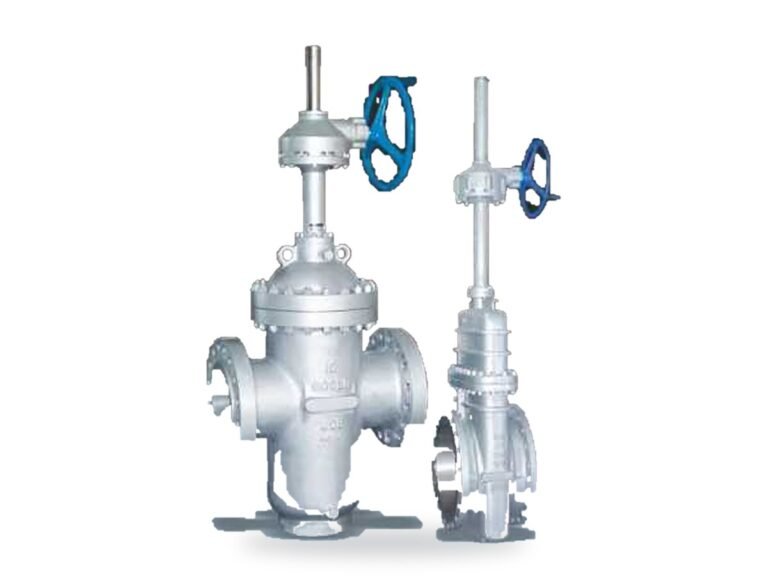
API 6D Slab Gate Valve
Full bore suitable for pigging; pipeline and station service.
View details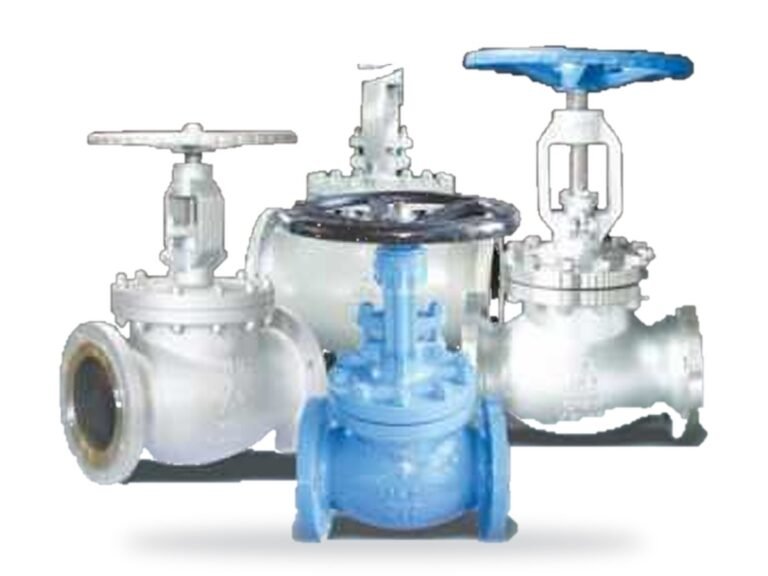
BS 1873 Cast Steel Globe Valve
Bolted and pressure seal bonnet; flat or plug disc, backseat, Stellite trim.
View detailsRequest a quote: API 600 Cast Steel Gate Valve
Share your valve list, datasheet or project specification. We review standards, materials and documentation line by line and return an itemized offer, with any deviation from the specification stated in writing.