Pressure Drop in Valves: Why It Matters (Cv / Kv Explained)
Pressure drop across valves is one of the most misunderstood topics in hydronic design.
This guide explains Cv / Kv, how pressure drop really behaves in HVAC systems,
and why ignoring it leads to noise, control instability, and wasted pump energy.
1. What Is Pressure Drop in a Valve?
Pressure drop is the loss of pressure as fluid flows through a valve due to internal restrictions,
changes in flow direction, and friction.
In HVAC systems, pressure drop directly affects:
- Pump sizing and energy consumption
- Control valve authority
- Noise and vibration
- System stability at part load
A valve is not “just open or closed”.
Every valve introduces a hydraulic resistance, even when fully open.
2. Cv and Kv Explained (Without Marketing Language)
Cv and Kv are flow coefficients that describe how easily a valve allows flow.
They are not ratings of quality — only of hydraulic capacity.
| Coefficient | Definition |
|---|---|
| Cv | Flow (US gpm) at 1 psi pressure drop (water at ~60°F) |
| Kv | Flow (m³/h) at 1 bar pressure drop (water at ~20°C) |
Higher Cv / Kv means lower pressure drop for the same flow.
Lower Cv / Kv means the valve is more restrictive.
A “bigger valve” does not automatically mean better control.
Oversizing often causes low authority, instability, and noise.
3. Why Pressure Drop Is Necessary (Up to a Point)
Some pressure drop across a valve is not a problem — it is required for control.
Control valves need a usable ΔP to modulate accurately.
- Too little ΔP → poor controllability
- Too much ΔP → noise, vibration, energy waste
Problems arise when available system ΔP is far higher than the valve’s design intent.
This is a major cause of the noise issues explained in
ΔP-related HVAC piping noise.
4. Pressure Drop vs Flow: Why Part Load Is Critical
Pressure drop does not behave linearly.
As flow decreases, control valves close and local ΔP across the valve often increases.
- Variable-flow systems amplify this effect
- VFD-controlled pumps maintain head
- Terminal valves see rising ΔP at low demand
This explains why many systems are quiet at full load but noisy during normal operation.
5. Pressure Drop and Valve Selection
Different valve types behave very differently in terms of pressure drop:
- Butterfly valves: low ΔP when fully open, sensitive to throttling
- Ball valves: very low ΔP, poor throttling control
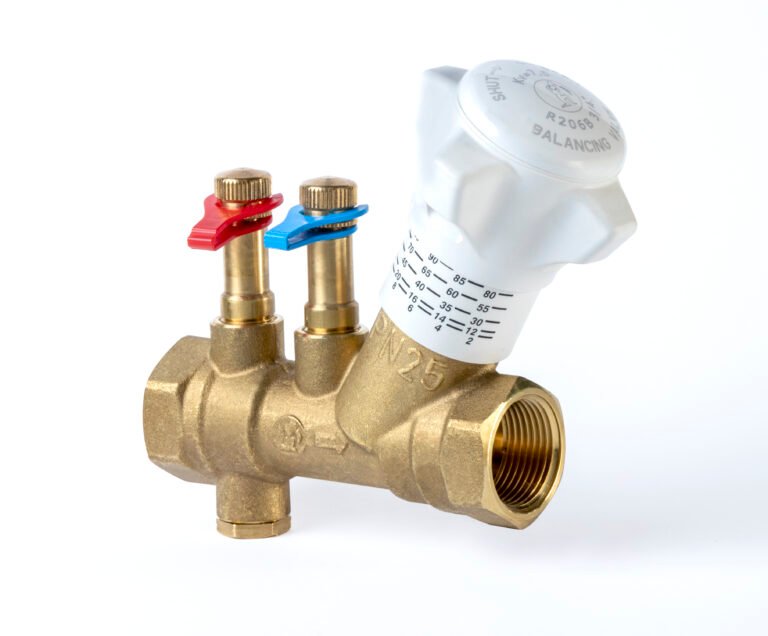
- Globe/control valves: higher ΔP, better control authority
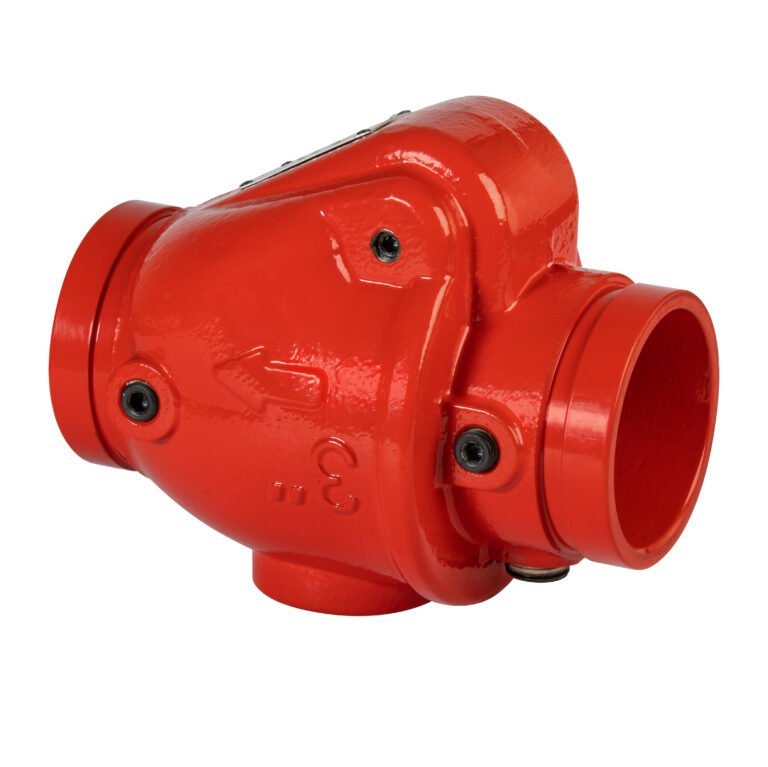
- Check valves: often underestimated source of pressure loss
Check valve pressure drop and instability near pumps is discussed in detail here:
Swing check valves on pump discharge.
6. Pressure Drop, PRVs, and System Stability
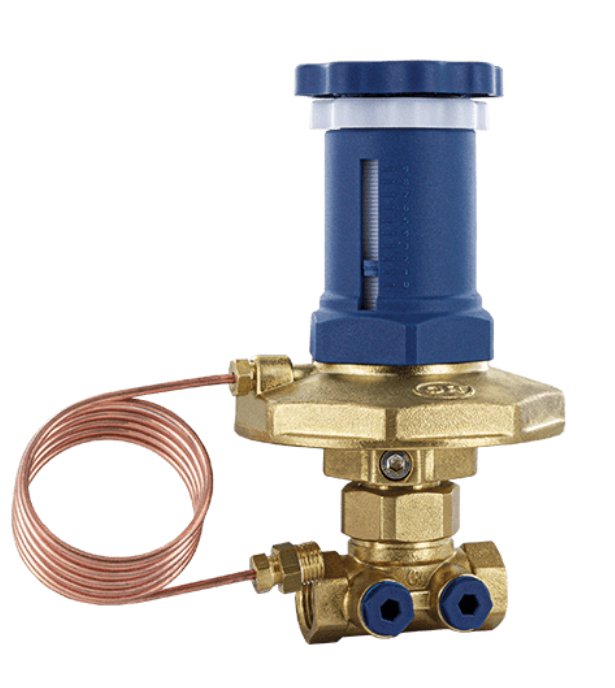
Pressure reducing valves (PRVs) and differential pressure control valves are used
to manage excessive ΔP in systems.
However, they must be selected with realistic pressure ratios in mind.
Improper pressure reduction can lead to instability, noise, and cavitation.
For fundamentals, see:
Pressure reducing valves explained.
Pressure drop should be distributed intentionally across the system —
not concentrated accidentally at terminal valves.
Why Increasing ΔP Causes Noise in HVAC Piping
Always verify valve selection and pressure drop assumptions against project-specific conditions.